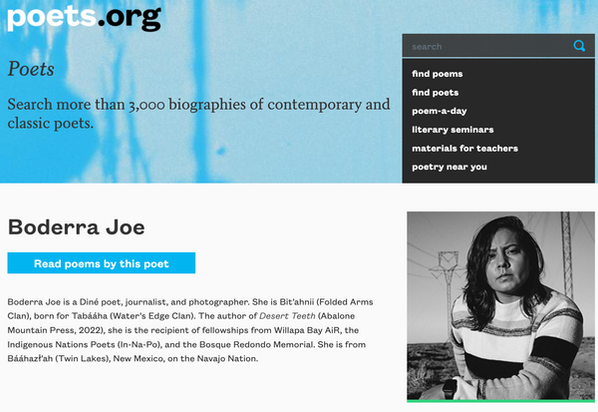
Boderra Joe

Publications

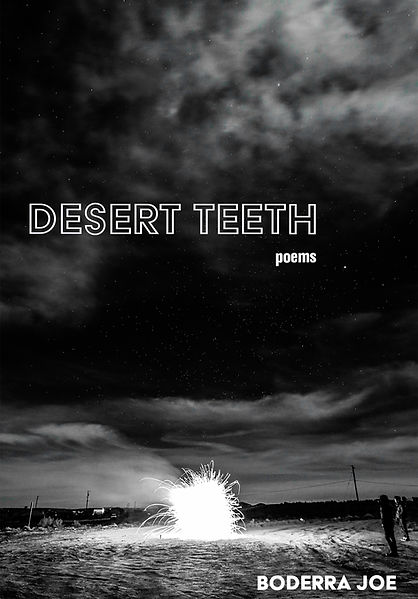
Desert Teeth
poems
"I grip Boderra Joe's Desert Teeth tightly in gratitude. This is a book of place--Twin Lakes, America, mountains and motels, this world, and the fourth world--dotted by placemarkers of origin, family, language, connection, and the human heart. We could cast these poems in a political light, with their unflinching look at American greed, uranium mining on Diné homelands, illness, Western religion and its painful erasure of sexuality, queerness, and love. But the light in these poems is more supple than politics, alone. Tenderness, a rare respect, vulnerability, and heartbreak glow inside each line. Here, I am opened up, returned to my humanity.Thank you, Boderra Joe, for this powerful reminder that in this place, on this land,"we exist because of our stories."
- Layli Long Soldier, author of Whereas
"Boderra Joe's debut poetry collection emanates from the exquisite, spare landscape of the eastern Navajo Nation, where the rain, düst, rez dogs, and the whine of the highway traffic are part of daily life. The poems summon the voices• of beloved relatives, the lingering echo of fatal vehicle crashes, alongside the sublime delight of black coffee and fresh biscuits in Grandma's kitchen. This innovative work shows how the land and language shape our lives and assures us that, indeed, our collective memories and stories conținue to guide us."
- Luci Tapahonso, Inaugural Poet Laureate of the Diné Nation
"How our throats hold a wail" writes Boderra Joe in her debut poetry collection Desert Teeth. An exquisite and timely work, Boderra generously offers glimpses of Diné life and the struggles that often bind us together as an Indigenous nation.These are poems of celebration and survival, where memory and story root deep within the land and its people. Please read and be astonished by this talented emerging Diné voice.
- Sherwin Bitsui, author of Flood Song
Landscape and perspective flood Boderra Joe’s DESERT TEETH, a collection of poetry that unfolds the wakening shift of scarred violence affecting native people and land for centuries, where alcohol and uranium, two of many elements, continue to take the lives of our relatives. Each poem lingers and holds the face of the reader through deep explorations of grief, family, identity, and love. These poems walk out on their own with the memories and images that flicker by, like a thought too frightened to talk. The vulnerability and rawness in each poem expands the perspective, longing for closure, acceptance, and understanding. Each poem lives in language and landscape, all while the haunting violence interferes. Beauty has its way of revealing itself.
Elsewhere